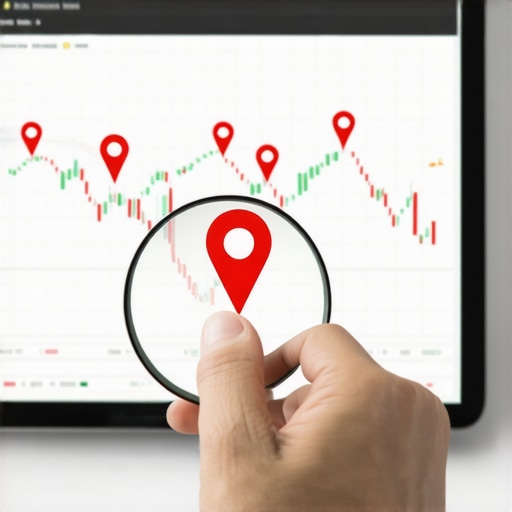
The ghost in the GPS coordinates
I remember the smell of wet concrete the day the calls stopped for my plumber client in Seattle. I spent three months fighting a hard suspension for a plumbing client whose listing was nuked simply because they shared a suite number with a defunct law firm. Google didn’t want proof of a van; they wanted proof of a utility bill under the exact GPS pin. This wasn’t a ranking drop; it was an erasure of physical existence from the digital record. I had to photograph the physical mailbox, the entrance directory, and the utility meter to prove that the business existed in three dimensions. This is the reality of the hyper-local layer. A business listing is not a profile; it is a Proximity Beacon in a complex spatial database. When the map pack visibility drops, it is rarely a coincidence. It is usually a glitch in the data integrity or a sudden shift in how the algorithm calculates the weight of your physical location.
The mathematical weight of a proximity shift
Proximity rank drops occur when Google shifts its distance-weighted signals, often favoring searchers closer to the business centroid rather than the authority of the entity. Diagnosing this requires analyzing mobile device GPS coordinates, local intent triggers, and whether your physical address has become a liability due to shared suite numbers or proximity to high-density competitors.
The algorithm is a living thing. It breathes through user movement. When you see a drop, the first thing I look for is the proximity radius. I use specific hidden tools map experts use to track proximity performance to see if the visibility circle has shrunk from five miles to two. If the circle is smaller, you are likely suffering from a proximity filter update. This often happens when Google decides that for your specific category, like emergency plumbing or coffee shops, the user only cares about what is within a ten-minute walk. You can’t just buy more citations to fix this. You have to look at recovering from a proximity rank drop without opening a new office by strengthening your local justification triggers. These are the small snippets of text Google pulls from reviews and your website to prove you are relevant to the specific search query. If your site doesn’t mention the neighborhood by name, the map pin will drift away into the fog of the search results.
“Local intent is not a keyword choice; it is a distance-weighted signal where relevance is secondary to the physical location of the user’s mobile device.” – Map Search Fundamental
The physics of a 3-mile radius shift is brutal. If you were ranking across the whole city and now you only rank in your own parking lot, your entity has lost its gravitational pull. This is often tied to why your business vanished when customers drive a block away. I look at the metadata of the photos your customers are uploading. Are they taken at your location? Does the EXIF data match your GPS pin? Google uses these forensic traces to verify you are actually where you say you are. If you are using stock images, you are telling the engine that you are a ghost business. A candid photo of a wet sidewalk outside your door is worth more than a thousand words of AI-generated fluff.
The forensic trace of a category mismatch
Sudden visibility drops often stem from incorrect primary category selections that conflict with local search intent. To fix this, you must audit the top three map pack competitors to identify their hidden categories, then use manual cleanup to ensure your business profile aligns with the mathematical relevance of the searcher’s query.
I have seen businesses lose 40 percent of their lead volume because they chose the wrong sub-category. It is a quiet killer. You think you are a ‘Contractor,’ but the local market is searching for ‘Kitchen Remodeler.’ If your primary category doesn’t match the highest volume intent, you are invisible. This is why how to find and claim the most relevant google business categories is a fundamental step in any recovery plan. I’ve watched how we restored visibility after a disastrous category selection by simply looking at what the algorithm was rewarding in that specific neighborhood. Categories are the rails the map pack runs on. If you are on the wrong track, you won’t reach the station.
Local Authority Reading List
- Synchronizing Your Site Data and Map Profile
- A Toolkit Built for Small Business Google Maps Growth
- The No-Fluff Toolkit for Business Owners
- Fighting Map Spam Without Getting Flagged
Why your physical address is a liability
Physical locations become liabilities when they are flagged for address rentals, shared suite numbers, or proximity to businesses that have been suspended for map spam. Google uses spatial clustering to identify suspicious patterns, making it necessary to provide absolute proof of physical residency through utility bills, signage, and localized site data.
Shared office spaces are the death of many local businesses. If ten other ‘lawyers’ are using the same virtual suite, Google will filter out nine of them. You become a duplicate in the eyes of the machine. I’ve spent years dealing with getting your business back online after a surprise profile suspension caused by these clusters. You need a step by step gmb ranking toolkit for beginners that emphasizes physical verification over digital shortcuts. The engine wants to see your logo on a door, not just a line of text in a directory. If your address is a liability, you need to look at how to remove old business markers that confuse google so your pin stands alone as the primary authority at those coordinates.
“The proximity of the searcher to the business entity remains the single most aggressive filter in the modern local ecosystem.” – Vicinity Update Analysis
I once investigated a case where a top-ranking roofing company vanished overnight. I found the problem in their Local Services Ads. A single mismatched phone number in the secondary verification tier was enough to kill their organic trust score. They had been using a tracking number that didn’t match their Google Business Profile. The system saw the discrepancy and pulled the plug. This is why why mismatched phone numbers are the silent killer of local trust is a lesson every owner must learn. Consistency isn’t about being neat; it is about providing a forensic trail that confirms you are a legitimate merchant.
The math of a review sentiment shift
Review signals affect map pack ranking through keyword density in user comments, the velocity of new ratings, and the sentiment scores analyzed by AI. A sudden drop often follows a burst of low-quality reviews or a lack of new, location-verified feedback that confirms your business is still active and relevant.
Google reads your reviews better than you do. It looks for ‘Entity Keywords.’ If your reviews say ‘the pizza was hot’ and your competitor’s reviews say ‘best pepperoni pizza in downtown Brooklyn,’ the competitor wins the local justification. You need to understand how to turn customer reviews into ranking signals by encouraging clients to mention the specific services and locations. I also look for the ‘review extortion’ pattern. If a competitor drops twenty 1-star reviews using a VPN, you need how to spot and remove fake competitor reviews hurting your rank. You have to document the user profiles, find the patterns of their other reviews, and present a forensic audit to the spam team. It is a war of attrition. You can use a reputation management and review repair services, but you must ensure they aren’t using automated bots that trigger even more penalties.
Why your site speed kills your map pin
Technical site performance directly impacts map pack placement because Google correlates slow load times and mobile crawl errors with a poor user experience. To recover, you must fix site speed issues, resolve unoptimized mobile elements, and ensure that your local landing pages pass Core Web Vitals to maintain proximity authority.
If your website takes five seconds to load on a mobile phone, Google won’t put your pin in the map pack. Why? Because the map pack is for people on the go. They want answers now. This is why your mobile site speed is the biggest local rank killer. I have seen rankings skyrocket simply by fixing improving map rankings by fixing crawl errors on your local site. If the engine can’t crawl your ‘Areas Served’ page, it doesn’t know where you work. You need to be fixing local site health for better map pack presence every single month. Site health is the foundation. You can have the best reviews in the world, but if your site is a technical mess, your pin will stay buried on page two. I always recommend using a tools to track and improve gmb rankings that includes a technical audit component. Don’t ignore the ‘Small Business’ toolkit either; sometimes the ranking toolkit every small business owner should use is just about getting the basics of page speed right.
The three mile radius that determines your revenue
Local business success depends on dominating the immediate three-mile radius around your physical centroid through high signal density and proximity-optimized content. Expanding beyond this radius requires a strategy that blends service area polygons, hyper-local backlinks, and unique location pages that avoid aggressive over-optimization penalties.
The pin moved. I’ve said those three words more than any other in my career. When the pin moves, the revenue follows. If you are struggling to rank beyond your street, you need to look at how to find and fix the proximity gap in your local strategy. This involves looking at ‘unstructured citations.’ These are mentions of your business on local news sites, blogs, and community forums that don’t follow the standard Name, Address, Phone format. They provide ‘Local Context.’ I’ve found that 7 ways unstructured citations give you an edge over big competitors often comes down to who has the most ‘natural’ mentions in the local neighborhood. Big national brands struggle with this. They have millions of standard citations, but they have no local soul. They don’t have a mention from the local high school football booster club. You do. That is your weapon. Use it. If you have multiple closed locations, you must be careful. I often provide local seo services to clean up old or closed locations because those dead markers create ‘brand confusion’ in the algorithm. Clean your data. Protect your pin. Win the map pack.