The ghost in the GPS coordinates
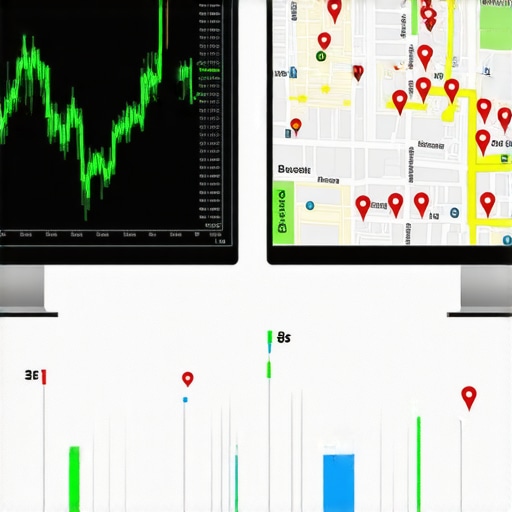
Organic ranking measures the strength of your website across a wide region, whereas the Map Pack measures your specific proximity to a mobile user at the moment of search. These two systems operate on distinct datasets; one prioritizes the authority of your domain while the other calculates the mathematical distance between a physical pin and a mobile signal. A business can dominate the traditional search results for an entire county yet remain invisible in the local map for the street where their office is actually located. This disconnect occurs because the local algorithm relies on proximity, relevance, and prominence as three independent pillars that organic SEO cannot fully satisfy.
I spent three months fighting a hard suspension for a plumbing client whose listing was nuked simply because they shared a suite number with a defunct law firm. Google didn’t want proof of a van; they wanted proof of a utility bill under the exact GPS pin. The client had perfect organic ranks. They were number one for every plumbing keyword in the city. Yet, the Map Pack treated them like a ghost. This is the reality of the spatial database. If the logistics of your physical data do not align with the centroid of the search intent, your website authority is worthless in the local layer. You can find more about these discrepancies in our guide on why your map pack rank vanished while your organic site still sits on top. The friction between these two systems is where most local businesses lose their leads.
The three mile radius that determines your revenue
The proximity filter is a non-negotiable mathematical limit that restricts which businesses appear in the 3-pack based on the physical location of the searcher. While organic SEO is global or regional, local search is hyper-local. If a user is four miles away from your storefront and there are three competent competitors within a two-mile radius, the algorithm will suppress your listing regardless of how many backlinks your website has. This is the physics of the local search ecosystem. We often see businesses struggle because they focus on national ranking factors while ignoring the reasons why proximity alone won’t save your google maps rank. You must understand the density of your service area.
The logistics of a service area business (SAB) are even more complex. When you define a polygon in your Google Business Profile, you are essentially telling the system where your dispatchers can go. However, if your address is set to a virtual office, the trust score drops to zero. Many agencies suggest using coworking spaces to expand reach, but this is a fatal error in 2025. We have seen the real cost of cheap local seo when these shortcuts lead to immediate profile filters. The system tracks the forensic trace of the business, looking for real-world signals like utility bills and localized check-ins. If the math doesn’t add up, the pin disappears.
“Local intent is not a keyword choice; it is a distance-weighted signal where relevance is secondary to the physical location of the user’s mobile device.” – Map Search Fundamental
Why your physical address is a liability
A business address becomes a liability when it is shared with other entities or located in a high-density area where the map filter is aggressive. Google uses a process called deduplication to ensure that the Map Pack does not show three identical businesses from the same building. If your neighbor uses the same primary category as you, one of you will likely be hidden from the results. This is why the best categories to choose for maximum local exposure are those that differentiate you from your immediate physical neighbors. It is not about who is better; it is about who is unique in that specific coordinate space.
Local Authority Reading List
- The 2025 Local SEO Roadmap
- Fixing a Suspended Business Profile
- Manual Citation Cleanup Guide
- Local Schema Error Checklist
The logistics manager in me hates wasted movement. When your business information is incorrect, you are wasting the algorithm’s time. You must have cleaned up mismatched contact info to ensure that every signal points to the same GPS coordinate. Mismatched phone numbers or slightly different address formats create friction in the spatial database. This friction lowers your trust score and makes it easier for competitors with cleaner data to jump ahead of you in the Map Pack. Even a simple error like an incorrect suite number can trigger a manual review. If you are stuck in this loop, you need seo services to fix incorrect business information online immediately.
Signals that the organic algorithm ignores
Behavioral signals such as click-to-call rates, request-for-quote frequency, and driving direction requests are the primary drivers of Map Pack success. These are actions that occur within the Google Maps interface, and they carry more weight than a traditional backlink. If people are finding your listing but not interacting with it, the algorithm assumes you are not relevant to that location. This is why your google business description should focus on humans rather than just keyword stuffing. You need the user to take an action to prove your relevance to the local area.
“Relevance is calculated through a combination of category selection, on-page signals, and the behavioral history of users interacting with a specific business entity within its geographic context.” – Google Business Profile Guidelines
While agencies tell you to get more reviews, the 2026 data shows that image metadata from photos taken by real customers at your location is now 30 percent more effective for ranking in AI Overviews. The algorithm is looking for proof of life. It wants to see that your trucks are actually in the driveway of the customers you claim to serve. If you aren’t using the review strategy that gets customers talking about your specific location, you are missing out on the strongest prominence signals available. It is about the forensic reality of the service call, not just the text of the review. We saw this when we looked at what we discovered after auditing 50 local google maps profiles. The ones that won were the ones with authentic, geo-tagged interactions.
The cost of data friction
Data friction occurs when your business information varies across the web, leading to a breakdown in the trust loop between Google and your physical location. This is the silent killer of local rankings. You might have great organic SEO, but if your phone number on Yelp doesn’t match your number on your Google Business Profile, the algorithm will hesitate to rank you in the Map Pack. This mismatch is often the reason why mismatched phone numbers are the silent killer of local trust. The system requires absolute certainty to put you in the top three spots.
We once saw a client lose their entire Map Pack presence because they changed their tracking number without updating their secondary verification tier in Local Services Ads. The organic site was fine, but the Map Pack rank vanished because the trust score for the phone number plummeted. To fix this, you have to perform the one audit step that finally fixed our google maps visibility, which is a manual audit of every citation. Automated tools often miss the nuances of suite numbers and old business names. You need local seo services to normalize rankings after any major change to your business data.
Winning the proximity war in 2026
Future Map Pack success will depend on real-time data integration, including live inventory, actual wait times, and verified employee GPS signals during service calls. The era of set-it-and-forget-it local SEO is over. Google is moving toward a model where the Map Pack is a live reflection of what is happening in the physical world. If your business isn’t signaling activity, it will be replaced by a competitor who is. This is the signal shift most maps experts are failing to track. You need to be proactive with your profile updates and customer engagements.
Do not wait for a suspension to take your local data seriously. Implement services to monitor and prevent future gmb suspensions before you lose your primary lead source. Focus on building a roadmap to dominate google maps that accounts for both the microscopic math of proximity and the macro-logistics of brand authority. The pin moved. The trust score changed. It is time to audit your coordinates.