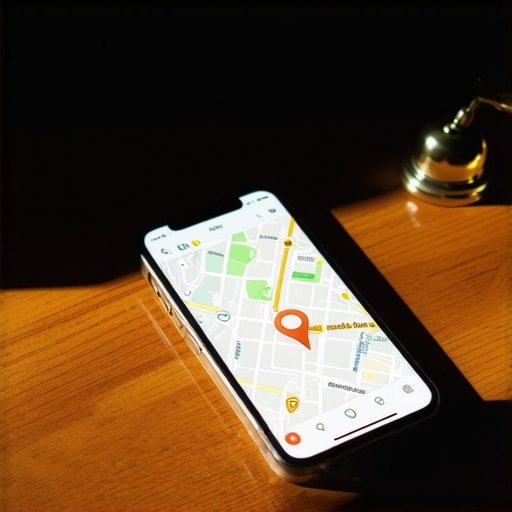
Generating phone calls from a Google Business Profile requires an understanding of how distance, relevance, and user behaviors interact within Google Maps. Many business owners believe that getting reviews is enough. However, the modern map algorithm relies heavily on technical signals, coordinate accuracy, and verified real-world activity. If your listing is not optimized for local search, potential customers will never find you when they need your services. To truly dominate the map pack, you must turn your profile into a high-converting lead source that triggers instant clicks.
The night the phone stopped ringing
Google Business Profile metrics do not lie when a real business gets targeted by algorithmic changes or malicious competitors. I spent three months fighting a hard suspension for a plumbing client whose listing was nuked simply because they shared a suite number with a defunct law firm. Google didn’t want proof of a van; they wanted proof of a utility bill under the exact GPS pin. During those ninety days, their phone calls dropped to absolute zero. The owner was forced to lay off two technicians because their entire pipeline relied on that single map listing. This painful experience taught me that Google does not care about your hard work or your physical storefront. It only cares about clean, indisputable database entries that prove you exist exactly where you say you do. If your data is messy, your business is invisible. To prevent these sudden drops, you need a structured strategy built on absolute technical compliance.
“Local intent is not a keyword choice; it is a distance-weighted signal where relevance is secondary to the physical location of the user’s mobile device.” – Map Search Fundamentals
The three mile radius that determines your revenue
Proximity and user location are the primary ranking factors that dictate whether your business listing appears in local search results. While optimization helps, Google will always favor a business closest to the user’s mobile device. This means a service business cannot easily rank twenty miles away without a dedicated, verified location strategy. If your map rankings are highly volatile after expanding to a new area, you need the moves we made to restore map rank after a sudden drop to bring stability back to your lead pipeline. Trying to trick the system with fake addresses or rented mailboxes will only lead to permanent suspensions. Instead, focus on building dense local signals within your immediate three-mile radius. Once you dominate your closest neighborhood, you can expand outward using geo-targeted landing pages and real physical verification methods.
Understanding this spatial reality is the first step toward getting more customers to call your business. When users search for emergency services, they choose the nearest option. This behavior makes it crucial to keep your location data clean and accurate. Many businesses make the mistake of hiding their address when they should be displaying a verified physical location to build trust with both search engines and customers.
Why your physical address is a liability
Using shared offices, virtual addresses, or residential properties can trigger automatic listing suspensions and destroy your local ranking authority. Google uses advanced machine learning to scan street views and business registration databases for anomalies. If your address points to a UPS Store or a shared coworking building, your profile is a ticking time bomb. This is why many owners see their map rankings drop while their organic website traffic remains completely unaffected. For businesses facing these issues, studying why using a virtual office for your listing is a ranking killer is essential for long-term survival. You must establish a real physical presence with a dedicated lease, visible signage, and consistent utility bills to rank safely in highly competitive niches.
If you have already made the mistake of using a virtual address, you must take proactive steps to fix it. This involves changing your profile details to a genuine commercial location and submitting clean documentation to Google. A single address error can flag your account, leading to a loss of rankings that takes months to recover. Hard work on your website will not save a listing that violates Google’s core guidelines.
The hidden technical bugs killing your mobile visibility
A slow website or technical crawl errors on your location landing pages will directly suppress your Google Maps rankings. Google constantly spiders the website associated with your business profile to verify your services and operating hours. If your website has duplicate content or soft 404 errors, Google’s trust in your business drops. This crawl failure often results in your listing sinking below your competitors. To fix this, you should look into how to fix 404 errors on local service pages so search bots can easily index your location signals. Clean code, schema markup, and fast page load speeds are the foundation of any successful local search campaign.
When a customer clicks the website button on your map profile, they expect an instant response. If your mobile page loads slowly, they will click back and call the next competitor. This user behavior signals to Google that your business is not a high-quality match, resulting in a swift drop in rankings. Regular technical audits are necessary to find and fix these hidden leaks in your conversion funnel.
The specific tools to diagnose local ranking drops
Using basic keyword tracking software will give you false rankings because local search results change every few blocks. To see how your business actually performs, you must use grid-tracking tools that measure your visibility from various coordinate points. This allows you to spot where your ranking drops off and where your competitors are stealing your leads. If you are struggling with low visibility, you can use tools to solve your low Gmb ranking woes to identify exactly where your signal is failing. Comparing tools and choosing the right toolkit for your specific business size is critical for making data-driven decisions that increase your phone call volume.
By tracking your positions on a hyper-local level, you can deploy targeted optimization campaigns. For instance, if your business ranks well to the north but drops off to the south, you can focus on building citations and local links from that specific southern neighborhood. This targeted approach is far more effective than generic SEO packages that try to optimize for entire cities at once.
Local Authority Reading List
- Find the software that works: The Gmb ranking software features most agencies overlook
- Reclaim your map positions: The essential toolkit for reclaiming your top 3 map spot
- Understand true rank tracking: Why your Google Business Profile ranking software is giving you false data
- Optimize for the mobile user: The mobile seo move that fixed our local search bounce rate
The local review equation that beats automation
Automated review generation tools and fake reviews will trigger manual spam penalties that wipe out your local profile. Real search engines are highly sophisticated at detecting patterns, review velocity, and IP anomalies. If your reviews all come from accounts with no local history, Google will filter them out or suspend your account. For high-performing brands, utilizing why professional review repair services are essential for modern brands is the only safe way to clean up your reputation and build real trust signals. A manual approach to review acquisition always outperforms automated bots in the long run.
Encourage your real customers to leave detailed feedback mentioning the specific service they received and the neighborhood they live in. This adds rich contextual keywords to your profile naturally, helping you rank for long-tail search queries. It also proves to Google’s algorithm that you are actively serving customers in your local community.
“Relevance is determined by how closely your business profile content aligns with the user’s explicit query and real-time behavioral patterns.” – Map Search Fundamentals
The ghost in the GPS coordinates
A single mismatch in your business name, address, or phone number across the web can trigger a quiet algorithm drop. When Google crawls directory sites, business licenses, and maps, it expects to find identical data. If your name is spelled differently on three major sites, Google’s algorithm decreases your confidence score. To prevent this, you need a manual citation audit to align every digital reference of your brand. If you have been over-optimizing your business name with keywords, you can use the fix for over-optimized local content patterns to safely normalize your rankings. Clean, structured data is always more stable than short-term optimization tricks.
Maintaining absolute consistency across all platforms is hard work, but it is necessary for building lasting authority. Spend the time to claim your listings on premium local platforms and delete duplicate records. This backend cleanup will build a strong foundation that helps your main map listing stay at the top of the pack for years.
The roadmap to high call volumes
Increasing phone calls from your Google profile is a process of eliminating technical errors and proving real-world activity. Start by cleaning up your location pages, securing a real physical address, and tracking your rankings on a coordinate grid. Respond to every review manually and keep your business data consistent across the entire web. By treating your Google Business Profile as a precision marketing engine, you will attract more local customers and keep your phones ringing consistently. Stop relying on basic ranking packages and start building a real local presence that competitors cannot touch.