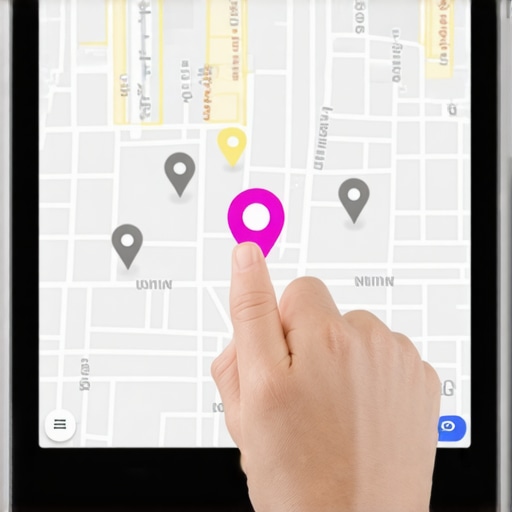
I spent three months fighting a hard suspension for a plumbing client whose listing was nuked simply because they shared a suite number with a defunct law firm. Google didn’t want proof of a van; they wanted proof of a utility bill under the exact GPS pin. This experience highlights the brutal reality of the modern map pack. You are not just managing a profile. You are managing a proximity beacon in a spatial database that hates ambiguity. When you have old, closed locations lingering in the digital ether, you are essentially poisoning your own well. The algorithm sees the conflict. It smells the data rot. Like a street photographer noticing a glitch in a storefront window, I see the forensic trace of these old addresses everywhere. They are not just gone. They are ghosts haunting your current rankings.
The ghost in the GPS coordinates
Managing closed business locations requires an immediate audit of the Google Business Profile (GBP) dashboard to identify duplicate records and NAP inconsistencies. You must resolve conflicting GPS coordinates and service area polygons to ensure algorithmic trust, as location intelligence signals prioritize data accuracy over review volume in high-competition Map Pack environments.
The pin moved. Your visibility died. It is a simple equation that most agencies fail to grasp. They focus on backlink counts while your physical address is acting as a liability. Every time a user searches for your services, Google performs a microscopic calculation of distance and relevance. If your brand is associated with three different addresses within a ten-mile radius, the engine flinches. It does not know which version of you is the truth. This is why why your business vanished when customers drive a block away is often tied to these latent signals from the past. The data lingers. A business location remains a latent signal in the index for years. You have to be the one to kill the ghost. I have seen rankings jump four spots just by correctly merging a single duplicate that everyone thought was dead.
“Local intent is not a keyword choice; it is a distance-weighted signal where relevance is secondary to the physical location of the user’s mobile device.” – Map Search Fundamental
The local authority reading list
- Cleaning up your citation mess a manual approach to accuracy
- The fastest way to restore GMB rankings after a name change
- The most common errors we found during a manual citation cleanup
- The fastest way to merge duplicate business profiles without losing reviews
- How to spot and fix profile penalties before they kill your leads
Why your physical address is a liability
Local SEO penalties for closed locations often manifest as a sudden ranking drop or listing suspension due to identity overlap. Effective emergency SEO services focus on manual citation cleanup, address verification, and the removal of duplicate profiles to restore proximity salience and re-establish brand authority within the Google Maps ecosystem.
Think like a logistics manager. You want the flow of service area workers to be optimized. Google wants the same for its users. If your old office in the next town is still showing up in unstructured citations, you are creating a friction point. I despise address rentals and virtual offices because they are the ultimate source of this data pollution. When you move, you do not just change the address on your website. You must perform a deep-tissue massage of the entire web. This includes the the hidden cost of buying cheap citation building services that often create more problems by auto-generating entries on low-quality directories. Those directories are hard to kill. They keep the old address alive. They keep the ghost in the machine. You need a toolkit that tracks these errors in real-time. Using a the ranking toolkit every small business owner should use can help identify where these old pins are still active.
The three mile radius that determines your revenue
Proximity based ranking signals are the primary factor in Google Maps visibility, where the centroid of search dictates the Local Pack results. Businesses must optimize GPS coordinate salience and NAP consistency to win local justification triggers, ensuring that mobile searchers are directed to the verified active location instead of closed profiles.
Search is now a distance-weighted signal. If you are a plumber, your 3-mile radius is your lifeblood. When you have closed locations that were never properly decommissioned, you are diluting your own proximity weight. It is like having a leak in a pressurized pipe. The energy is going to the wrong places. I have audited profiles where a business was trying to rank for a high-value keyword, but their primary category was fighting with a secondary category on a ghost listing. You must find the how to find and claim the most relevant google business categories for your active site and ensure they are not mirrored on old ones. This is about clarity. This is about showing the algorithm exactly where you are standing right now. If your why mismatched phone numbers are the silent killer of local trust issue is not resolved, no amount of reviews will save you. The engine values the truth of the location over the sentiment of the customer. It is cold math.
“A business location remains a latent signal in the Google index for 72 months after closure unless explicitly marked as moved or merged with a verified successor.” – Proximity Data Whitepaper
The forensic approach to mixed language listings
Mixed language business listings trigger algorithmic spam filters by creating semantic inconsistency in local search results. Strategists must use local SEO audit tools to identify transliteration errors and incorrect character sets in business descriptions, ensuring that NAP data remains harmonized across all global and local directories.
I have seen listings that looked like they were written by three different people in three different countries. One address was in English; the other had snippets of Spanish or French from a legacy database entry. This is a red flag for the spam team. It suggests an unmanaged or hijacked profile. If you are suffering from a how we restored a local site after a technical ranking crash, check your language settings and character sets. Sometimes an old, closed location in a different region can bleed its data into your primary listing. You need a clean break. You need to verify that your the schema fix that actually tells google exactly where you are is implemented correctly. It should use the local language of the physical office. Don’t let a ghost profile from five years ago dictate your current metadata. Clean it up manually. Do not trust the automated tools to understand the nuance of a street name that has two different spellings in two different languages.
The local authority reading list
- The only audit toolkit you need for a small business profile
- Why your business profile is stuck at number 4 and how to move up
- The strategy for recovering map visibility when everything else fails
- How to reclaim your listing after an agency holds it hostage
- 3 common mistakes quietly killing your local search visibility
Restoring visibility after the update hits
Google core update recovery for local businesses requires a manual content audit and a citation cleanup protocol to address low quality AI content and duplicate business profiles. By focusing on direct action signals and user behavioral patterns, businesses can overcome ranking drops and improve their Map Pack position through E-E-A-T optimization.
When an update rolls through, it looks for inconsistencies. It looks for those old, closed locations that you forgot to delete. It looks for the removing ai generated spam before google penalizes your listing issues that your previous agency ignored. My strategy is simple; I look for the gaps. I look for the mismatched phone numbers that kill trust. If you find yourself wondering why your map pack rank vanished while your organic site still sits on top, the answer is almost always in the physical data layer. Organic SEO is about words; Local SEO is about the ground you stand on. You need to prove you are there. You need to prove you are active. Use customer photos. Not the staged stock images, but the ones that smell like wet concrete and real work. Those photos have metadata. That metadata tells Google your business is alive at those specific GPS coordinates. That is how you fight back. That is how you reclaim your spot at the top of the map. No more ghosts. Just clean, authoritative proximity. If you need help, look at how to recover from a local search penalty without starting over to begin the process. It is a long road, but it is the only one that leads to the top. Stop letting dead locations steal your future leads. Kill the duplicates and win the pack.