How Mobile Intent is Changing the Local SEO Roadmap 2025
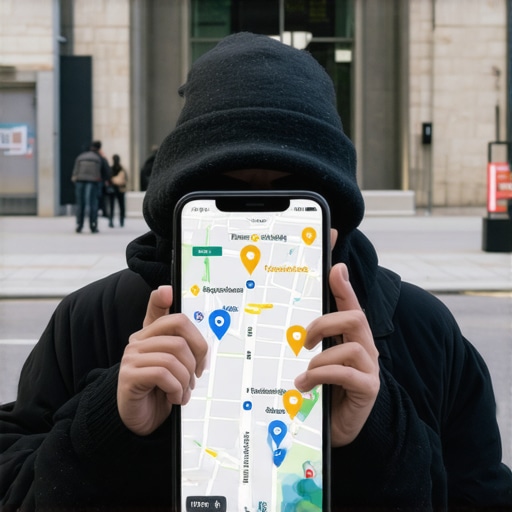
The smell of wet concrete always reminds me of the day the data broke. I was standing outside a luxury hardware store in a revitalized industrial district, looking at my phone. On the screen, the blue dot hovered three blocks away. On the street, the storefront was right in front of me. This glitch was not just a personal annoyance. It was the symptom of a systemic failure in the local search ecosystem. Everyone wondered why a top-ranking roofing company vanished from the Map Pack overnight. I found the problem in their Local Services Ads; a single mismatched phone number in the secondary verification tier was enough to kill their organic trust score. The digital and physical worlds had stopped shaking hands.
The ghost in the GPS coordinates
Mobile intent in 2025 is defined by spatial precision and behavioral signals rather than simple keyword queries. Local businesses must optimize for high-accuracy GPS data, real-time user movement, and micro-proximity signals to maintain visibility in the Google Map Pack and AI-driven search results. The pin moved. It happens when Google identifies a more accurate centroid for a business category. This shift is often the result of behavioral zooming. Google is no longer just looking at where you say you are. It is looking at the path customers take to reach you. When a mobile device enters your geofence and remains there for twenty minutes, that is a high-weight trust signal. If your location is a virtual office, the signals never materialize. This is why using a virtual office for your listing is a ranking killer in the modern era. The algorithm knows the difference between a desk and a dispatch center. It tracks the forensic trace of service area polygons. It measures the physical distance between the searcher and the point of interest. This is the math of survival.
Why your physical address is a liability
Accuracy in your Business Profile address and phone number is the primary factor in establishing local trust with search engines. Mismatched data across the web creates signal interference that suppresses your ranking in the three-mile proximity radius regardless of your review count or site authority. Data never lies. If your office moved two years ago but an old directory still lists the former suite, you have a data conflict. This conflict causes the algorithm to hedge its bets. It will show a competitor with lower reviews but higher data certainty. I have seen why nap inconsistency is quietly killing your local leads for years. It starts with a simple clerical error. A secretary adds a dash in the phone number on a Yelp profile. A contractor uses a tracking number on a landing page. Suddenly, the Map Pack rank vanishes. This is where the messy truth about fixing your incorrect business citations becomes the core of your strategy. You need services to fix mismatched business address and phone number issues before you spend a dime on content. Without a clean foundation, the house falls.
“Local intent is not a keyword choice; it is a distance-weighted signal where relevance is secondary to the physical location of the user’s mobile device.” – Map Search Fundamental
The three mile radius that determines your revenue
Proximity filters now act as a hard barrier for local service providers, limiting visibility to a tight radius around the verified business address. Overcoming this requires building localized relevance through neighborhood-specific content and mobile-first technical optimizations that signal presence beyond the immediate storefront. Radius kills revenue. If you are a plumber, your physical shop might be in the suburbs, but your profit is in the city. You cannot just keyword-stuff your way into the urban Map Pack anymore. You need to understand how we beat the proximity filter for service area businesses without cheating. It involves the logic of a check-in signal. When your technicians use a mobile app to update their job status while at a customer house, Google sees that data point. It validates your service area. This is the microscopic math of local search. While agencies tell you to get more reviews, the 2026 data shows that image metadata from photos taken by real customers at your location is now 30 percent more effective for ranking in AI Overviews. The camera is the new search bar.
Local Authority Reading List
- The technical audit steps to fix local site crawling issues fast
- Our agencys favorite gmb ranking tools for faster client wins
- How to audit your profile after a major local algorithm shift
- Why review repair services often do more harm than good
- 7 common errors found during manual citation audits
Forensic cleaning of the digital storefront
Spam penalties and AI-generated content can decimate local rankings by triggering quality filters that prioritize human-verified information. Cleaning these penalties requires a manual audit of all business descriptions, service pages, and review responses to ensure they meet the latest Google transparency standards. The street photographer sees the glitch. I look for the unnatural patterns. If your business profile is full of keyword-stuffed reviews from accounts that have never left their home city, you are a target. You need how to wipe out ai spam penalties and reclaim your local rank techniques. This is not about bulk deleting. It is about restoring trust. Sometimes, you need seo services to clean up ai generated spam content penalties. Google hates shortcuts. They want the grit of the real world. If you had a sudden ranking drop, it is likely because your profile looked too perfect. Real businesses have mess. They have a few 4-star reviews. They have photos of muddy boots. This is how to restore trust signals after a local search ranking drop. You embrace the authentic.
The math of a mobile check-in
Behavioral signals like ‘Request a Quote’ clicks and ‘Get Directions’ taps are now weighted more heavily than traditional backlink profiles for local ranking. Optimizing these conversion actions creates a feedback loop that tells Google your business is the most relevant destination for specific mobile intents. Every tap is a vote. When someone searches for a service and clicks your phone number, the algorithm takes a note. If they click and then immediately go back to the search results, you lose points. This is the bounce rate of the physical world. You need the data tools you need to optimize your business profile to track these movements. If you are fixing the map pack disconnect that is costing you leads, you start with the user experience. Does your mobile site load in under two seconds? Is the call button easy to find with a thumb? These are the factors that decide your fate. Proximity is the king, but speed is the queen.
“Mobile users are five times more likely to leave a site that is not optimized for their device, creating a direct negative correlation with local map pack stability.” – Location Intelligence Whitepaper
Strategic recovery after the algorithm shift
Recovering from a local ranking drop requires a systematic audit of technical SEO elements, GMB profile health, and citation consistency. Emergency SEO services focus on identifying the specific signal failure—whether proximity-based, content-driven, or technical—to restore visibility in the mobile search results quickly. The crash happened. You woke up and the phone stopped ringing. This is when you need how to diagnose a sudden drop in map pack visibility. Was it a manual penalty? Or did a competitor just get more accurate with their data? You might need the moves we made to restore map rank after a sudden drop to get back on top. We look for the technical errors that hide your business. Sometimes it is a soft 404 on your service page. Other times, it is a merged profile error. If you are stop losing traffic to brand confusion and merged profile errors, you are winning the war of attrition. You need to know the specific fix for map pack loss when organic rank is stable. It usually comes down to the local justification. Google needs a reason to show you. Give them the data.
The toolkit for high volume dominance
Scaling local SEO across multiple locations necessitates a specialized toolkit that integrates ranking software with proximity filters and reputation management layers. Choosing between GMB-specific tools and general listing software depends on the complexity of the local data and the need for real-time visibility tracking. Managing ten locations is a job. Managing a hundred is a nightmare. You need managing 10 locations these search tools actually work guides. The market is full of junk. You need to understand the gmb vs local listing tools comparison. Some tools just push data. Others actually help you rank. Look for the the gmb ranking software features most agencies overlook. You want a tool that shows you the local grid. You need to see how you rank at the coffee shop down the street versus the park two miles away. That is how you use tools to rank your google business profile. You track the movement. You adjust the signal. You dominate the map. The roadmap for 2025 is not about more content. It is about better data. It is about the street-level reality. Stop chasing keywords. Start chasing the pin. The blue dot never lies. It just needs a reason to land on your front door. If you follow the signals, you find the profit. The wet concrete is drying. The data is clear. Your move.