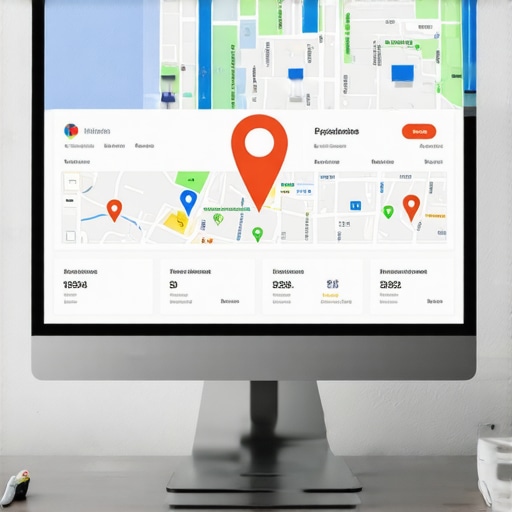
My boots smell of wet concrete; they have for twenty years of walking past physical storefronts and analyzing real world data. I look at local map packs and I do not see simple digital business listings; I see highly complex proximity beacons operating in a spatial database. It is a world where distance vectors, user coordinate paths, and algorithmic checks decide which merchant survives. Far too many agencies sell cheap citation blasts that scatter incorrect information across dead directories, or they tell you to rent a virtual mailing address. They are selling you a fast track to a hard suspension. Organic map presence is built on hard, verifiable local data signals, and a single mistake can turn your business into a digital ghost.
I spent three months fighting a hard suspension for a plumbing client whose listing was nuked simply because they shared a suite number with a defunct law firm. Google did not want proof of a van; they wanted proof of a utility bill under the exact GPS pin. That brutal experience showed me that Google does not care about your marketing goals; it cares about absolute, physical verification. To help you audit your own setup, I have compiled a comprehensive list of resources below.
Local Authority Reading List
- Find the complete strategic vision in our crafting a winning local seo roadmap for 2025 blueprint.
- Understand how local layouts change by reading how google maps will shape local seo rankings in 2025.
- Address platform-level issues with the exact steps to reclaim a flagged or suspended business listing.
- Discover the tool selection truth at why most small businesses buy the wrong seo tools.
- Learn how tracking really works with the software we use to track real time local map movements.
The physical coordinate matrix and centroid gravity
Every mobile search initiates a distance-weighted calculation where the geographic coordinates of the searcher are weighed directly against your physical location pin. If your business profile does not align perfectly with the user centroid, you are invisible. This is not about keywords; it is about coordinate math. The proximity radius behaves like physical gravity, pulling relevant local businesses into the three-pack based on real-time mobile signals. The algorithm continuously measures the distance between the searcher’s IP or GPS signal and the verified physical address of your business listing.
“Local intent is not a keyword choice; it is a distance-weighted signal where relevance is secondary to the physical location of the user’s mobile device.” – Map Search Fundamental
We ran a test with a local merchant whose visibility had collapsed entirely. Everyone assumed it was a negative review campaign. It was not. They had quietly changed their secondary phone line and their suite number. This caused their geographic verification score to drop beneath the local threshold. When you understand centroid theory, you stop chasing generic backlinks and start securing your physical anchor points instead.
Why your physical address is a critical liability
A physical address is the single most vulnerable asset in your search marketing strategy because Google actively penalizes shared workspaces and unverified suites. If you try to use a virtual office space to game the system, your listing is a sitting duck. Google’s computer vision models actively analyze street view data to verify that your business signs are permanently attached to the building. If they find a shared executive suite instead, your profile will be flagged for immediate suspension.
We have seen hundreds of businesses lose their entire livelihood because they fell for cheap local search shortcuts. Many companies believe they can buy local seo tools for gmb and instantly fix a bad setup. The reality is that no software can fix an address that violates Google’s terms of service. You must verify your actual physical footprint, ensuring your office is fully staffed during listed hours, before you can expect to rank for competitive terms.
How we audited our profile with a modern toolkit
To diagnose our visibility problems we used a specialized local audit toolkit to map our citation footprint and scan for conflicting location data. By running a manual check on our primary category, our coordinates, and our business name variations, we exposed exactly why the ranking algorithm was filtering us out. The scan showed that old directories still listed our previous address, causing a massive trust mismatch. We realized that a successful local roadmap must always start with a clean physical audit.
Our process involved using top google business profile seo toolkits to run deep geographic grid scans. These scans show you exactly where your rankings drop as a user moves blocks away from your office. If your visibility collapses just two blocks away, you have a signal authority problem. For businesses struggling with these issues, using dedicated google business profile recovery services can help realign the profile and restore lost search engine trust.
The hidden data conflicts in your business hours history
Inconsistent opening hours on your website and third-party listings create an algorithmic trust deficit that quietly pulls down your local map rankings. If your listing says you are open on Sundays but your official website or local directory listings suggest you are closed, Google will penalize your profile to protect its users. The algorithm values accuracy over everything else, and it flags historical changes that do not match up across the web. You must ensure your scheduling metadata is perfectly aligned across every single platform.
If you have a messy operational history, you might need specialized seo services to fix gmb profile with inconsistent opening hours history to clean up the records. Old, crawled data can linger in Google’s index for years, continuously contradicting your current hours. A systematic crawl cleanup is the only way to purge these ghosts from your digital footprint and regain absolute local authority.
The danger of duplicate content and soft errors on city pages
Duplicate city landing pages that swap out location names while keeping the exact same text trigger local search filters that hide your site. Google’s indexing engine easily identifies thin, repetitive content patterns across multi-location websites. When these pages are flagged as soft 404s, the authority of your primary business listing takes a massive hit. You must provide unique, highly specific local information on every single landing page you publish.We frequently find that businesses copy and paste their entire service description across fifty different city pages. This strategy triggers duplicate content filters and stops search engines from crawling the pages correctly. To fix this, you should invest in services to fix soft 404 and duplicate content issues. Unique regional data, local photos, and distinct service details are mandatory if you want your location pages to index and drive actual customer phone calls.
How to audit your business profile with a toolkit
A successful profile audit requires a systematic checklist that inspects category choices, coordinates, image metadata, and citation consistency. First, you must verify that your primary category matches your actual business model perfectly. Second, you must check your secondary categories for keyword stuffing or over-optimization. Finally, you must trace every mention of your name, address, and phone number across the web to eliminate conflicting citations.
If you want to know how to audit gmb profile with a toolkit, you should focus on spatial tracking. Do not rely on generic rank trackers that measure city-wide averages. You need grid-based software that shows how your business performs at specific intersections. This micro-data is the only way to see if your local optimization efforts are working or if you are losing ground to closer competitors.
The forensic recovery from a malicious negative campaign
Defending your business against a sudden influx of fake reviews requires immediate forensic auditing of user profiles and rapid reporting to Google. When competitors use virtual private networks and automated accounts to drop dozens of one-star ratings, your map position can vanish in a single afternoon. You must document the attack patterns, identify the fake profiles, and present a clean, data-backed case to Google’s spam team to get the reviews removed.
When an attack occurs, many business owners panic and try to buy automated reviews to balance the score. This is a massive mistake that often triggers a profile suspension. Instead, seek out professional services to recover from negative seo attack. A clean, compliance-driven recovery process will protect your profile’s longevity and restore your genuine local authority without violating search guidelines.
How keyword stuffing triggers sudden profile suspensions
Adding extra keywords to your official business name on Google Maps is a direct violation of guidelines that guarantees a manual suspension. While it might give you a temporary ranking boost, the spam team or your local competitors will eventually flag your listing. Once suspended, you must provide formal business licenses and utility bills to prove your legal name matches your digital listing perfectly. Clean, un-stuffed business names are the only way to build a sustainable local presence.
If your profile has already been taken down due to over-optimization, you need specialized assistance. Utilizing professional seo services to fix keyword stuffing and content issues will ensure your listing is compliant before you submit your reinstatement request. Removing spammy terms and aligning your website content with Google’s guidelines is the safest path to recovery.
Resolving deep technical crawling and indexing bottlenecks
Your local map visibility depends directly on how effectively Google can crawl and index your primary website. If your site has crawl errors, broken redirects, or missing schema markup, the search engine will struggle to associate your website with your map listing. A technical breakdown on your domain will quickly drag down your rankings in the local pack, even if your physical address is verified.
You must inspect your Google Search Console for indexation errors, slow page speeds, and mobile rendering issues. Implementing dedicated technical seo services to fix indexing and crawling issues will resolve these deep errors. A clean, fast, and schema-optimized website serves as the ultimate foundation for your local search strategy, sending strong authority signals directly to your map profile.
Reclaiming your business listing after a suspension
When your business profile suddenly disappears from the map, you must initiate a structured reinstatement process backed by physical evidence. You must collect utility bills, registration files, and photographs of your physical building before submitting your appeal. Do not submit multiple requests, as this will only delay your review and complicate the recovery process.
The recovery process can be incredibly stressful for business owners who rely on phone calls to survive. Working with experienced gmb profile reinstatement services ensures your case is handled correctly from day one. Professional teams know exactly what documentation Google’s investigators need to see to verify your business and get your listing restored safely.
Modern tools for tracking real map visibility
To compete in modern local search, you must use grid-based tracking software that measures your performance at different geographic coordinate points. Old-school keyword trackers that look at entire cities are completely useless for maps. You need to know if you rank in the top three when a searcher is standing fifty feet from your door, and if you still rank when they are two miles away.
Investing in the right platform will save you time and protect your marketing budget. Before you subscribe to any service, you should research the top google business profile seo toolkits available on the market. These platforms provide deep proximity insights, historical trend data, and coordinate-level tracking, allowing you to optimize your local strategy with absolute precision.