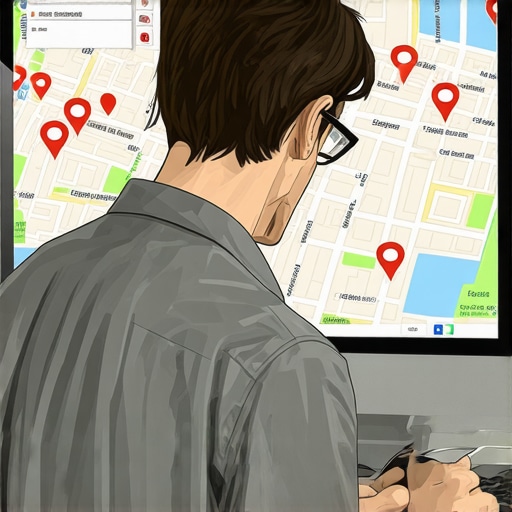
Why Buying Generic Links Is a Waste for Local Map Pack Growth
You’ve seen the offers. “1,000 High-DA Backlinks for $50,” “Premium SEO Link Building Package,” or the classic “Rank #1 on Google Guaranteed.” For a small business owner or a marketing manager struggling with google business profile seo, these packages look like a lifeline. You’re stuck at the bottom of page one, or worse, buried in the “More Businesses” graveyard, and you’re desperate for a boost. You buy the package, wait three weeks, and… nothing. Your Map Pack ranking hasn’t budged an inch.
I see this every single day. As a specialist who has audited hundreds of profiles, I can tell you that the “cheap backlink” myth is the single most expensive mistake in local marketing – not because of the $50 you spent, but because of the months of lost revenue while your competitors are eating your lunch. There is a fundamental disconnect between how standard organic SEO works and how the local map pack seo algorithm functions. If you treat your Google Business Profile (GBP) like a standard niche site, you are going to fail.
Research from the Local Search Forum consistently highlights a specific type of “defeat” felt by business owners who do everything “by the book” – optimizing descriptions, adding photos, getting reviews – yet remain stuck at rank #4, just out of sight of the lucrative top three. The reason? They are chasing “link juice” instead of “local relevance.” In the world of local search, not all links are created equal. In fact, most of the links you can buy in bulk are functionally invisible to the local algorithm. Before you spend another dime on a generic outreach campaign, you need to understand why The Real Cost of Cheap Local SEO and Why It Tanked Our Map Rank is a lesson you don’t want to learn the hard way.
The Trinity of Local Ranking: Proximity, Relevance, and Prominence
To understand why generic links fail, you have to understand the “Big Three” pillars of the google maps ranking system. Google doesn’t just look at who has the most “authority” in a traditional sense; it looks at who is the most qualified to solve the user’s immediate, geographic problem.
1. Proximity: The Unmovable Factor
Proximity is the distance between the searcher and your business location. If a user is standing on 5th Avenue looking for a “coffee shop,” Google is highly unlikely to show them a shop five miles away, regardless of how many backlinks that shop has. Proximity is the strongest signal in the Map Pack, and it is the one signal that generic backlinks cannot influence. You cannot “link build” your way into being physically closer to a customer.
2. Relevance: The “What” Factor
Relevance is how well your business profile matches what someone is searching for. This is where google business profile seo starts to get technical. If your profile and your website are flooded with links from “General News” sites or “Top 10 Tech Blogs” based in Eastern Europe, Google sees zero topical or geographic relevance to your plumbing business in Austin, Texas. Relevance is established through localized content, category selection, and – most importantly – links from entities that Google already associates with your service area and industry.
3. Prominence: The “Authority” Factor
Prominence is how well-known your business is in the offline world. Google attempts to mimic real-world reputation using digital signals. This includes reviews, articles, and citations. However, the local seo ranking factors that drive prominence are not the same as those that drive global organic rankings. Google is looking for “Local Prominence.” Does the local Chamber of Commerce mention you? Are you listed in the local directory that everyone in your city uses? A link from a high-authority global site like Forbes is great for organic SEO, but for the Map Pack, a link from your local high school’s football sponsorship page can often carry more weight because it anchors your business to a specific geographic coordinate.
When you buy generic link packages, you are attempting to manipulate Prominence while completely ignoring Relevance and Proximity. This creates a “signal mismatch” that Google’s AI-driven algorithm easily identifies and discounts.
Why Google Ignores Your Generic Backlinks
The “Relevance Gap” is the primary reason your Fiverr links aren’t working. Google’s algorithm has evolved far beyond simple link counting. Today, it uses sophisticated Natural Language Processing (NLP) and entity recognition to determine the “Who, What, and Where” of a business. When you rank google business profile listings, you are trying to convince an algorithm that your entity is the most relevant answer for a localized query.
Generic backlinks are usually “context-light.” They are placed on sites that cover everything from crypto-currency to keto diets. When Google crawls these sites, it sees no geographic “scent.” On the other hand, local seo ranking factors rely heavily on “Geo-Relevance.” A link from a local news outlet, a local blogger, or even a neighboring business creates a digital map that points directly to your front door. According to Locafy research, while standard citations (like Yelp or Yellow Pages) establish that your business exists, local backlinks establish that your business is an authority in its specific community.
Furthermore, Google has become incredibly adept at identifying “Link Neighborhoods.” If your profile is getting links from the same PBNs (Private Blog Networks) as thousands of other unrelated businesses, you aren’t building authority; you are flagging your account for manual review or algorithmic suppression. If you want to improve google maps ranking, you have to stop thinking about “Domain Authority” (DA) and start thinking about “Local Entity Authority.” You can read more about this shift in our guide on Why Standard Backlinks Fail Your Business Profile and What to Build Instead.
The “Possum” Update and the Multi-Tenant Trap
In 2016, Google rolled out the “Possum” update, which fundamentally changed how local results are filtered. One of the most significant changes was how Google handles businesses that share the same address or are located in very close proximity to one another. This is often referred to as the “Multi-Tenant Trap.”
Consider a CPA working out of a large office building in downtown Chicago. There might be twelve other CPAs in that same building. Google’s goal is to provide variety in the search results, so it will often “filter out” similar businesses at the same address, showing only one or two in the Map Pack. If you are the CPA being filtered out, no amount of generic, non-local backlinks will fix the problem. The algorithm sees a proximity conflict, not an authority deficit. To break through a Possum filter, you need a google business profile audit tool to identify if you are being suppressed due to address sharing.
Generic links cannot resolve a “Possum” issue because they don’t provide the “Direct Action Signals” or the “Hyperlocal Relevance” required to prove to Google that your business is more relevant than the one three doors down. In these cases, the solution isn’t more links; it’s better entity clarification and localized signals that differentiate your business from its immediate neighbors. I’ve seen businesses spend thousands on google maps ranking service packages that focus on links, only to find out their real problem was a shared suite number with a dominant competitor.
What to Build Instead: The Local Authority Roadmap
If generic links are a waste of money, where should you invest your google business profile seo budget? The answer lies in building “Local Authority” through relevance and direct interaction.
- Niche and Geo-Specific Citations: Instead of the “Big 50” citations that everyone has, look for the “Niche 5” that only your industry uses. If you’re a lawyer, a link from a local legal aid directory is worth more than a hundred generic directory links. Check out our list of The Niche Citations That Actually Move the Needle for Local Rankings for more specific examples.
- Local Sponsorships and Partnerships: Sponsor a Little League team, a 5k run, or a local charity event. These often result in a link from a `.org` or a local community site that is geographically tied to your city. This provides the “Proximity” and “Relevance” signals that Google craves.
- Hyperlocal Content: Create pages on your site that talk about your specific neighborhood, local landmarks, or community events. When you link these pages to your GBP, you are strengthening the geographic bond of your entity.
- Direct Action Signals: This is the “secret sauce” for 2025. Google tracks how many people click to call, ask for driving directions, or spend time reading your GBP posts. These “Direct Action Signals” are weighted much more heavily than traditional backlinks for Map Pack growth. As we always say, Why Local Authority is Built on Direct Action Signals Not Just Citations is the core philosophy of modern local SEO.
To truly rank higher on google maps, you must pivot away from the quantity-based mindset of the 2010s. One link from a local news site mentioning your involvement in a community project is worth more than 5,000 profile links from a “link blast” service. Google wants to see that you are a real, active participant in your local economy.
Looking Ahead: 2026 Algorithm Shifts
As we move toward 2026, the local map pack seo landscape is shifting again. We are moving away from “Search” and toward “Discovery” and “Predictive Assistance.” Google is increasingly using AI to predict what a user wants before they even finish typing. This means the signals that matter are becoming more dynamic.
In the near future, we expect to see “AR Pings” (Augmented Reality signals from users walking past your shop with their phones) and “Real-Time Foot Traffic” data playing a massive role in prominence. If Google sees that people are actually visiting your physical location, that is a signal no backlink can fake. We are also seeing the rise of “Predictive Search,” where Google suggests your business based on a user’s past behavior and current location. To stay ahead, you need to understand the 5 New Signals Shaping Google Maps Future Ranking in 2026.
The businesses that thrive in this new era will be the ones that focused on building a genuine local footprint rather than trying to trick the algorithm with “cheap” shortcuts. The algorithm is now smart enough to recognize the difference between a business that is popular on paper and a business that is popular in the streets.
Conclusion & The 2025 Local SEO Checklist
Stop wasting your marketing budget on generic link packages that provide zero geographic or topical relevance. If you want to dominate the Map Pack, you must focus on the “Big Three”: Proximity, Relevance, and Prominence. Start by auditing your current profile with The 5-Minute Local Audit That Revealed Why We Weren’t Ranking and identify where your signals are weak.
Your 2025 checklist should include:
- Verifying your primary and secondary categories for absolute relevance.
- Building 5-10 hyperlocal links from your specific city or neighborhood.
- Optimizing for Direct Action Signals by posting weekly updates to your GBP.
- Using local seo ranking tools to track your “grid rank” across your entire service area, not just from your office chair.
- Ensuring your NAP (Name, Address, Phone) is consistent across the web, but prioritizing niche-specific directories over general ones.
The road to #1 isn’t paved with cheap links; it’s built on local authority. If you’re ready to get serious, start using professional google maps seo tools today and leave the generic link-buying to your competitors who are destined to stay on page two.